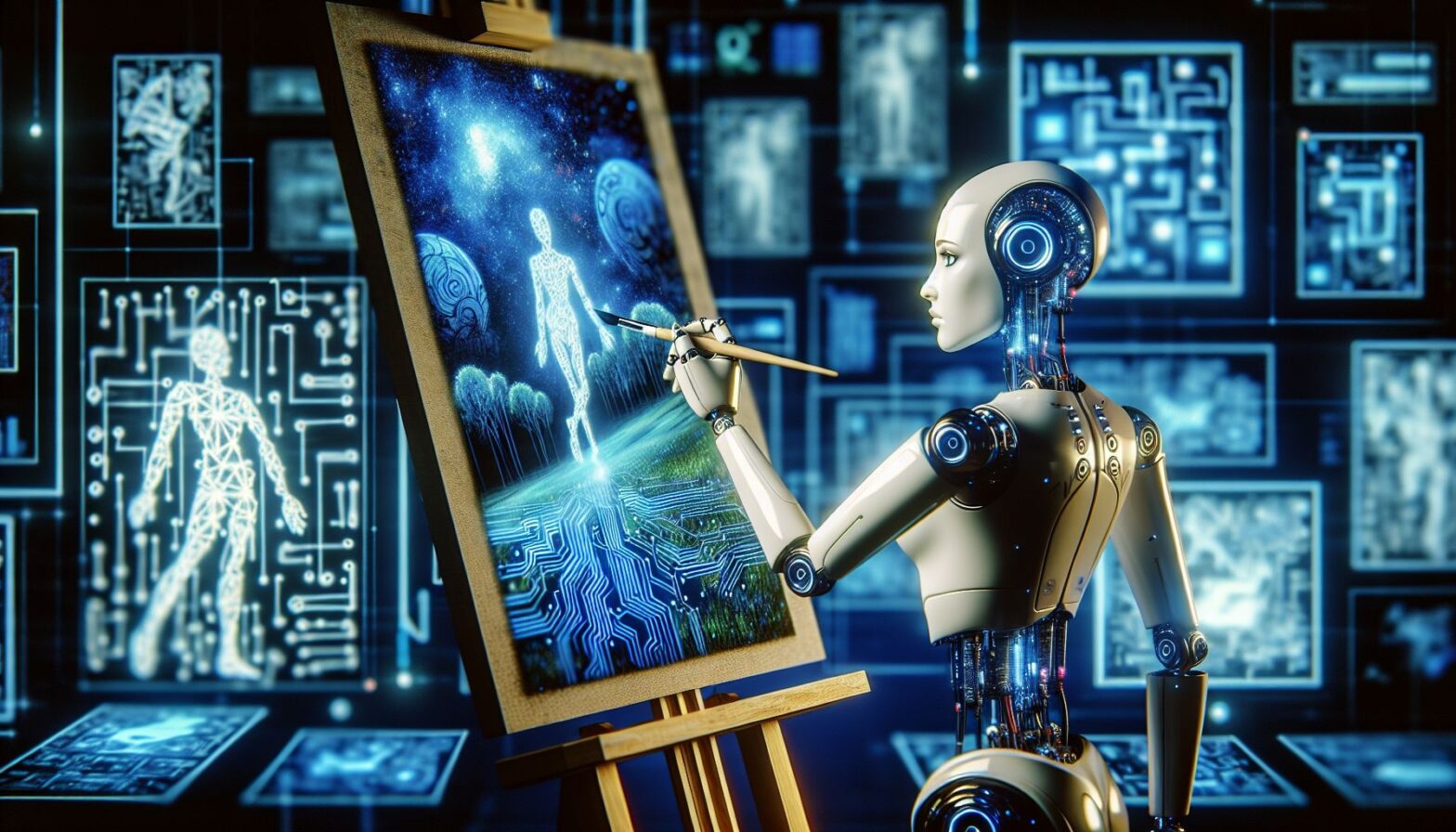
In a world increasingly run by algorithms and digital everything, there’s one area I never thought would get tangled up in all this: art. Now, before you roll your eyes, I’m not talking about some paint-by-numbers bot trying to figure out what made Van Gogh tick. No, we’re actually seeing something pretty interesting: AI mixing with creative arts. Step aside, human Picassos — the Robo-Rembrandts are here to drag us into some kind of tech-art future.
The Artistic Genesis
A few years back, when “AI” felt more like sci-fi than reality, most of us figured creativity — that raw, passion-driven artistry — belonged to humans only. The digital world was all ones and zeros, stuck in logical pathways with zero detours to anything remotely abstract. Jump to today, and AI has ditched its robotic stiffness, actually embracing the messy beauty of chaos that every artist fights to balance while trying to create something meaningful.
Let’s look at some recent game-changers in AI artistry. Tools like DeepArt and OpenAI’s DALL-E deserve serious credit here. They’re taking humanity’s inner world and splashing it across virtual canvases. We can now dream in billions of text combinations and neural networks, creating digital art that honestly looks museum-worthy. These AIs are cranking out pieces we thought were impossible for machines — mixing technical glitches with genuine emotion. Go search “AI Art” right now and do yourself a favor: you’ll see both impossible Picasso-style creations and wild surrealism coming from AI-artist communities on platforms like Artbreeder.
Better than Bob Ross?
Picture this: you’re on your couch, watching what used to be Bob Ross’s soothing painting show. Fast forward to 2024, and we’re dealing with algorithmic art that gets created between broken thoughts and computer simulations. We’re looking at digital canvases that are honestly hard to tell apart from the old masters who had paint under their fingernails and calluses from gripping brushes.
But here’s where it gets weird. AI keeps reimagining what art should be, and I’m not sure how I feel about that. There’s something unsettling about software controlling the creative process, replacing artists who used to pour their souls into every brushstroke. Are we heading toward a future where human creativity becomes obsolete?
The whole thing makes me wonder about what we’re losing in this digital convenience. Sure, AI can pump out impressive visuals, but there’s something about the messy, human process of creation that feels irreplaceable. When I see AI art, I’m torn between admiration for the technical achievement and sadness for what might be disappearing.
Shifting Boundaries: Ethics and Authenticity
This is where things get really complicated. Who owns AI-generated art? If a machine creates a painting, can we call it authentic? These aren’t just philosophical questions anymore — they’re legal and economic issues that artists are grappling with right now.
I’ve talked to artists who feel threatened by AI, and honestly, I get it. Imagine spending years developing your style, only to watch a computer program mimic it in seconds. On the flip side, some artists are embracing AI as a new tool, like when photography didn’t kill painting but changed it.
The ethics get murky when AI trains on existing artwork without permission. It’s essentially learning from millions of human-created pieces to generate “new” work. Is that inspiration or theft? The art world is still figuring this out, and the answers aren’t clear-cut.
AI Synergy: Harmonizing Man and Machine
Maybe the future isn’t about AI replacing human artists, but about collaboration. I’ve seen some fascinating projects where artists use AI as a creative partner — feeding it ideas, then building on what it generates. It’s like having a brainstorming buddy that never gets tired and can visualize concepts instantly.
This partnership approach feels more promising to me. Instead of fearing the technology, artists can use it to push boundaries they couldn’t reach alone. AI can handle the technical heavy lifting while humans provide the emotional depth and cultural context that machines still can’t quite grasp.
The real question is whether we can maintain the soul of art while embracing these new tools. I think we can, but it’s going to require some serious conversations about what creativity means and how we value human expression in an increasingly digital world.