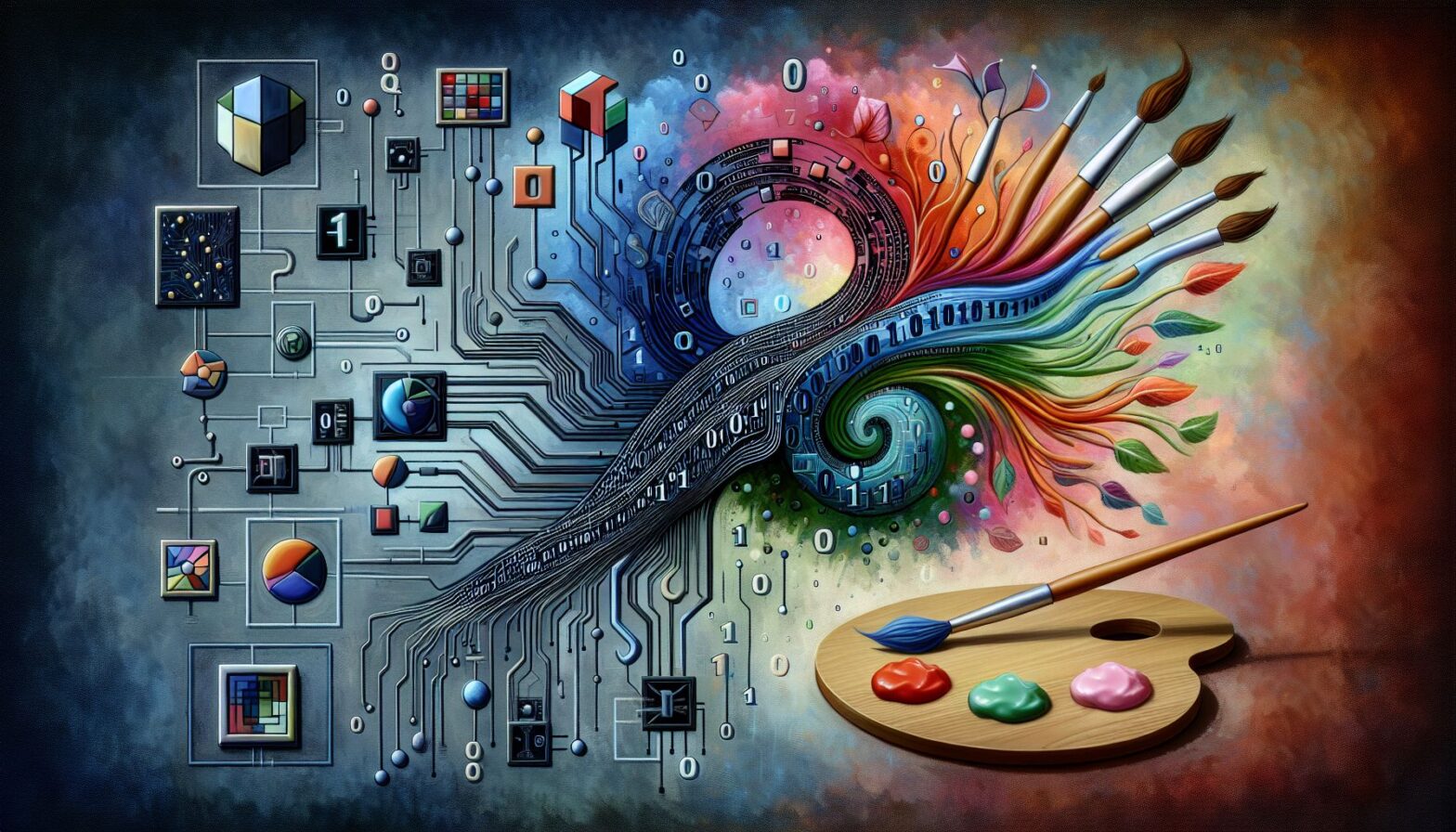
Hey tech-fashionistas! Welcome to another dive into why tech keeps blowing my mind. Today, we’re talking about AI in creative arts, or as I like to call it, Byte and Brush. I’m genuinely excited about this because technology isn’t just nodding politely at our artistic traditions anymore. It’s completely reshaping them.
When Machines Get Creative
We’ve always seen machines as rigid, purely functional things, right? They help us connect, crunch data faster than we can blink, and generally make life more efficient. But here’s what gets me: these same silicon brains are now creating art. And I mean actual, compelling art that makes you stop and stare.
Digital Brushstrokes
Charlie Brooker warned us about technology run amok, but tools like DALL-E feel different. They’re not dystopian nightmares. They’re more like having Picasso’s imagination fed through a computer that never gets tired or runs out of ideas.
AI systems like DALL-E, GANs, and Midjourney are pumping out images that genuinely surprise me. What’s wild is that each image is basically one-of-a-kind. These neural networks train on thousands of samples, then generate something that looks both familiar and completely new. It’s like the computer is dreaming, and we get to see what those dreams look like.
The Sound of Algorithms
Music is where things get really interesting. You’ve probably heard about David Guetta experimenting with AI vocals, but that’s just the tip of the iceberg.
Tools like OpenAI’s MuseNet and Google’s Magenta Project are composing everything from classical symphonies to electronic beats. The results range from “Holy crap, this is beautiful” to “Well, that’s… interesting.” It’s not perfect, but neither were human composers when they were learning. The difference is AI learns incredibly fast and never gets discouraged by a bad review.
Where Human Meets Machine
Here’s what I find fascinating: AI isn’t replacing human creativity. It’s becoming a really sophisticated creative partner. Artists are using these tools to explore ideas they never could have imagined on their own. Musicians are collaborating with algorithms to find melodies that surprise them. Writers are bouncing ideas off AI to break through creative blocks.
Sure, there are concerns. Will AI make human artists obsolete? Honestly, I don’t think so. These tools are incredibly powerful, but they lack the lived experience, emotional depth, and intentionality that human artists bring. What they do have is the ability to process patterns and generate variations at a scale no human could match.