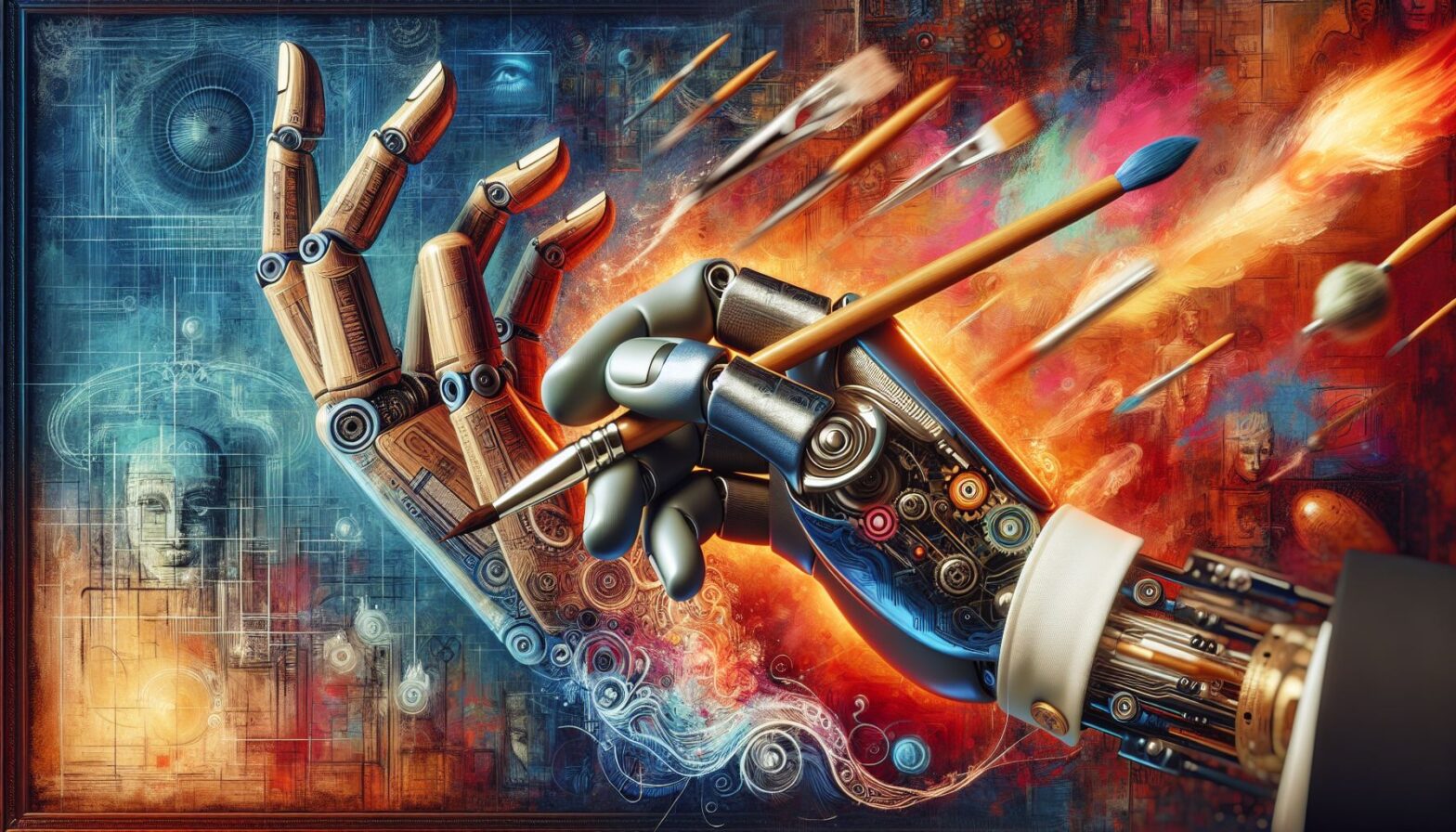
Hey tech-savvy folks! Let me jump right into something that’s got everyone talking. AI is changing how we think about art, and honestly, it might just give your local park artist some serious competition (though let’s be real, most of them enjoy a good chat about it).
Picture this: canvases filled with alien landscapes that no human has ever seen, or abstract portraits that capture emotions in ways we never thought possible. AI is opening up creative possibilities faster than you can say “digital revolution.”
When Machines Learn to Paint
We’re living through a time when art isn’t limited to human hands anymore. The AI creative scene is packed with tools that are genuinely impressive:
-
AI Art Generators: Programs like DeepArt, GANPaintStudio, and Artbreeder are the real deal. These tools use complex algorithms trained on thousands of artworks, and they’re getting scary good at understanding artistic styles. I’ve seen them create pieces that made me do a double-take.
-
Style Transfer Technology: This is where things get interesting. You can take Van Gogh’s swirling brushstrokes and apply them to a photo of your cat. The technology analyzes the texture, color patterns, and composition techniques of master painters and recreates them with surprising accuracy.
Now, I’ll admit the technology isn’t perfect yet. Sometimes you get results that look like a computer had a fever dream. But when it works, it’s genuinely exciting to see what emerges.
The Intersection of Art and Algorithm
What fascinates me most is how AI is learning the “rules” of art that humans have developed over centuries. Color theory, composition, even emotional expression—algorithms are starting to grasp these concepts in ways that would have seemed impossible just a few years ago.
Machine learning models can now analyze thousands of paintings to understand what makes a sunset “romantic” or a portrait “melancholic.” They’re not just copying—they’re learning the underlying patterns that make art emotionally resonant.
Beyond Traditional Boundaries
AI art tools are democratizing creativity in ways I never expected. You don’t need years of training to create something visually striking anymore. A photographer can experiment with painterly styles, a graphic designer can explore classical techniques, and someone with zero artistic background can generate compelling visual art.
But here’s what really gets me excited: the collaboration potential. Artists are using AI as a creative partner, feeding it their sketches and ideas, then working with the AI’s interpretations to create something neither human nor machine could have made alone.