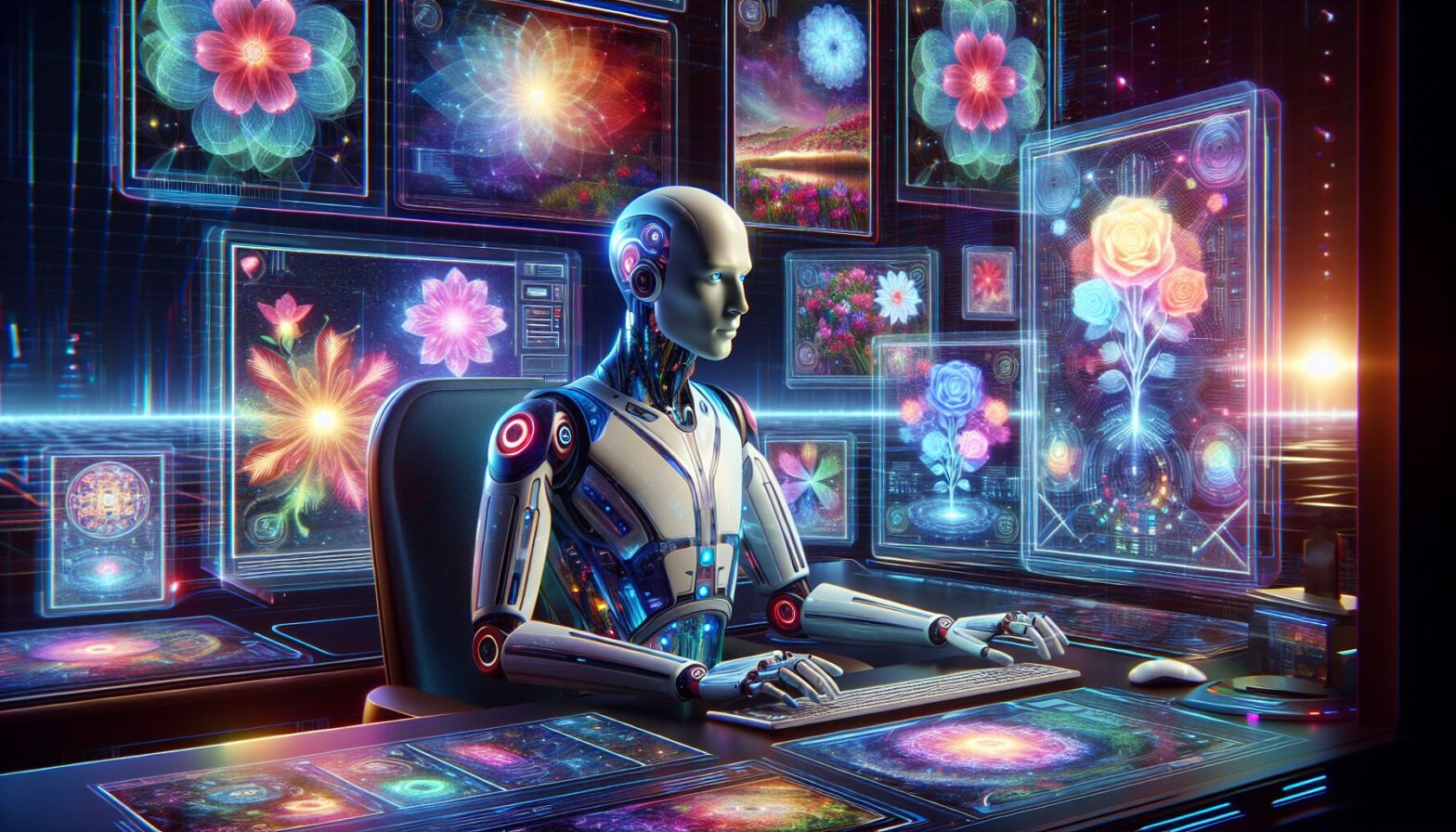
Howdy, fellow tech vagabonds! Picture a world where machines don’t just copy human skills but do it with a swagger that screams creative genius. Well, it’s not sci-fi fantasy anymore. It’s putting on its big boy pants and becoming reality, complete with a catchy soundtrack! Today we’re talking AI in creative arts. It’s like stumbling upon unicorns prancing through data forests, and honestly? I’m absolutely here for this madness.
When AI Started Getting Artsy
You might’ve heard the buzz in some corner of the internet, maybe while failing at yet another YouTube baking tutorial. Here’s what’s happening: AI-generated art that’s actually good. I’m not talking about wonky MS Paint knockoffs. We’re talking artificial intelligence that dreams up stunning landscapes, composes original symphonies, and writes stories that hit you right in the feels.
From Frida Kahlo to Digital Picasso
When I think of creative artists, I picture the classic tortured soul, Van Gogh painting with manic intensity. But now? The pixels have aligned in ways I never expected. Google researchers created DeepDream, an AI that transforms your dog’s photo into swirling psychedelic universes. They called it Inceptionism, a nod to reality-bending that’s more mind-blowing than confusing.
My curiosity got the better of me, so I spent hours playing with sites like Craiyon and Midjourney. These tools create wild visual stories. A celestial octopus tap-dancing in lava fields? Van Gogh doing Star Trek fan art? These AI-powered platforms consistently surprise me with creations that outpace what my human brain could imagine.
Music Made by Machines
Once AI conquered visual art, it waltzed straight into music territory. How do machines that lack human emotion create melodies that give you chills? Or compose pieces that would make Beethoven proud? The answer lies in training these systems on vast musical libraries, letting them learn patterns and create entirely new sonic signatures.
I’ve heard AI compositions that range from hauntingly beautiful to surprisingly funky. Some sound like they could be chart-toppers, while others venture into experimental territory that pushes musical boundaries. The technology learns from everything, from classical masters to modern pop hits, then spits out something completely original.
The Uncomfortable Questions
Here’s where things get messy. As someone who appreciates human creativity, I have mixed feelings about all this. Are we witnessing the democratization of art, or are we replacing human artists? The honest answer? Probably both.
I’ve seen incredible AI artwork that took my breath away. But I’ve also talked to struggling artists who worry about their livelihoods. The technology raises questions about authorship, originality, and what makes art valuable. If a machine can paint like Monet in seconds, what does that mean for the artist who spent years mastering those techniques?
Where This Gets Really Interesting
The most fascinating part isn’t AI replacing human creativity. It’s what happens when humans and AI collaborate. I’ve watched artists use AI as a creative partner, feeding it ideas and then building on what it generates. The results often surpass what either could create alone.
Musicians are using AI to break through creative blocks, generating melody ideas they never would have considered. Writers are collaborating with AI to explore new storytelling approaches. Visual artists are treating AI like a sophisticated brush that can paint in styles they’re still learning.
The Real Talk About AI Creativity
Let’s be honest about the limitations. AI doesn’t understand emotion the way humans do. It recognizes patterns and recreates them brilliantly, but it lacks the life experiences that fuel truly meaningful art. A machine can paint a sunset, but it’s never watched one while grieving a loss or celebrating a triumph.
That said, the technical capabilities blow my mind daily. AI can now generate art in specific styles, compose music in particular genres, and even write poetry that feels genuinely moving. The quality has jumped from “interesting experiment” to “legitimate creative tool” faster than anyone predicted.
What Artists Are Really Saying
I’ve talked to artists on both sides of this debate. Some see AI as the enemy, a threat to everything they’ve worked for. Others embrace it as the ultimate creative assistant. The middle ground seems to be emerging: AI as a powerful tool that enhances human creativity rather than replacing it.
The artists thriving with AI aren’t the ones trying to compete with it. They’re the ones figuring out how to direct it, how to use its capabilities to amplify their own vision. It’s like the difference between being replaced by a camera versus learning photography.